Licensed · Insured · Guaranteed · 24/7
Ant Control That Eliminates the Colony — Not Just the Trail
Ant control done right ends at the nest, not at the kitchen counter. Exile delivers professional ant control for homes across Northeast Ohio — licensed, insured, and guaranteed in writing: if the ants come back, so do we, free.
★ Free ant control quotes · Covered under plans from $24.99/monthAnt control is the single most requested service we run, and for good reason: the ants marching across your counter are a tiny fraction of a colony living in your walls, foundation, or yard. Effective ant control treats that colony at its source, so the problem actually ends instead of moving to another room. Exile Pest Control has provided ant control across Cuyahoga, Lorain, and Medina Counties for 10 years under Ohio license #174747 — and the difference between our approach and a can of spray is the difference between solving an infestation and rearranging it. Call (440) 822-0415 for a free quote, or send the form below any hour of the day.
What Our Ant Control Service Includes
Every ant control job starts with identification, because the ant control treatment that eliminates odorous house ants will not stop carpenter ants, and vice versa. Your technician traces the trails back to their entry points and nesting sites, then applies a combination of targeted baits and non-repellent treatments. Baits work because foraging ants carry them back to the colony — including the queen — which is the only way ant control actually eliminates an infestation rather than scattering it into new satellite colonies.
The service covers interior problem areas like kitchens, bathrooms, and baseboards, plus the exterior nest sites, foundation cracks, and utility entry points the ants are using to get inside. For carpenter ants — which hollow out damp wood for nesting — our ant control inspection also identifies the moisture conditions attracting them, so the source gets fixed rather than just the symptom. Every visit ends with a written summary of what was found, what was treated, and what to watch for while the baiting does its work.
Ant Control, Species by Species
Northeast Ohio’s housing stock and climate support a handful of ant species, and each one changes how ant control is planned and executed. The Ohio State University Extension publishes excellent identification guides — here’s the short version of what we treat most.
Odorous House Ants
The small, dark ants that show up in kitchens and bathrooms every spring — crush one and it smells like rotten coconut. They nest in wall voids and under floors, they relocate quickly when stressed, and repellent sprays are the worst ant control tool you can use on them: a stressed colony splits into several new ones, a behavior called budding. Slow-acting baits that workers carry home are the correct approach, and it’s what we use.
Pavement Ants
The colonies throwing up little soil craters between driveway seams and sidewalk cracks across older suburbs like Lakewood, Parma, and Elyria. They forage indoors for greasy and sweet food, especially in homes on slab foundations. Our ant control pairs exterior nest and crack treatment with interior baiting where trails have established.
Carpenter Ants
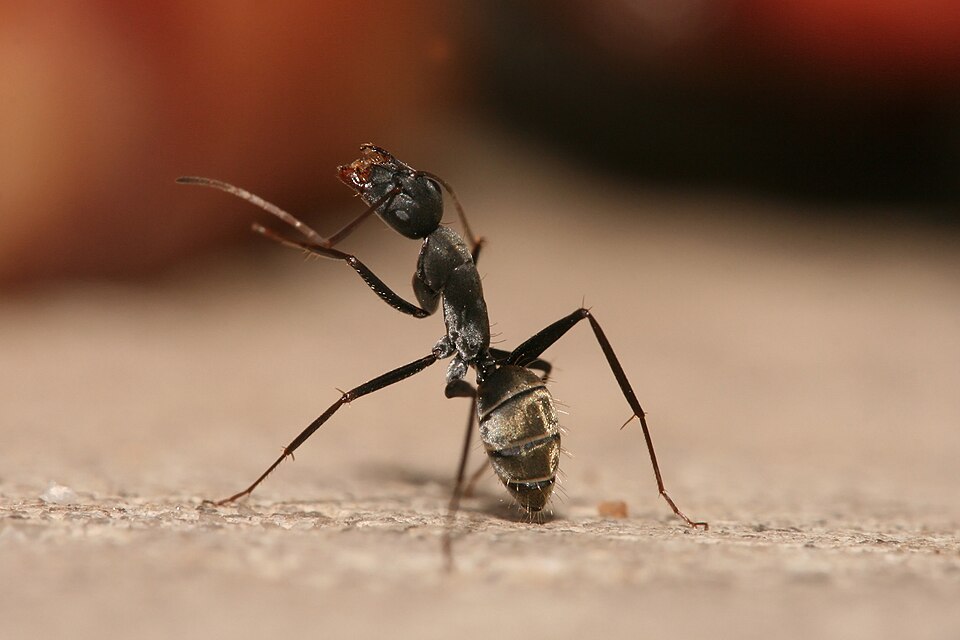
The big one — literally, up to a half inch — and the species that earns the most urgent ant control response. Carpenter ants excavate damp wood to nest in: window sills, deck posts, roof lines with old leaks. The wooded lots of Medina County and the ravine neighborhoods of Cuyahoga County give them endless staging ground. They don’t eat wood like termites, but an established colony in a sill plate or wall void does real structural damage over time. Winter ant activity indoors is a classic carpenter ant tell, and always worth an inspection.
DIY Ant Control vs. Professional Ant Control
Store shelves are full of ant control products, and they all share the same weakness: they treat what you can see. Repellent sprays kill the foragers on the counter and leave a chemical line that the colony simply routes around — or worse, reacts to by budding into multiple colonies. Home ant control baits can help with small problems, but placement is everything: bait set on the wrong trail, in the wrong formulation for the species, feeds nobody. The EPA’s guide to safe pest control makes the same point — identification and source treatment come before product.
Professional ant control gets three things DIY can’t: correct species identification, commercial non-repellent products that foragers can’t detect and carry home, and the experience to find satellite nests and entry points a homeowner walks past every day. That’s why our ant control work carries a written guarantee and the spray can doesn’t.
How Ant Control Treatment Works
- Identify the species. Odorous house ants, pavement ants, and carpenter ants each need a different ant control approach. We confirm what you have before treating anything.
- Trace and treat the colony. Baits and non-repellent products target the nest itself — including satellite nests — not just the visible trail.
- Seal the entry points. We treat and flag the cracks, gaps, and utility lines the ants used to get inside, so the next colony doesn’t inherit the same highway.
- Follow up. Baiting takes days to collapse a colony. If activity persists past the expected window, we return free — as many times as it takes.
What Ant Control Costs
One-time ant control treatments are priced by the size of the home and the extent of the infestation — a single kitchen trail costs less to resolve than a mature carpenter ant colony in a wall void — and pricing is identical across every community we serve (see our full service area). We quote the exact ant control price before starting, and every quote is free. Most homeowners with recurring ant problems come out ahead on our Complete Protection plan — now at a limited-time sale rate — which covers ant control as a core service with free re-treatments between seasonal visits. Call (440) 822-0415 and we’ll give you a real number, not a range.
Ant Control Prevention: Keeping Them From Coming Back
Treatment ends the current colony; habits and structure keep the next one out. The prevention half of ant control is unglamorous but powerful: store sweets and pet food in sealed containers, wipe counters and fix dripping taps to deny food and water, trim branches and shrubs touching the house — they’re ant highways — and keep mulch pulled back a few inches from the foundation line. Combined with the treated exterior barrier our seasonal visits maintain, those habits mean new colonies scout your house and move on. If spiders are showing up to hunt the ants, our spider control service handles both ends of that food chain.
Why Northeast Ohio Homeowners Choose Exile for Ant Control
Ant pressure isn’t uniform across the region. Lakefront homes in Bay Village and Avon Lake deal with moisture-driven carpenter ant activity that a Strongsville colonial rarely sees; newer builds in Medina and North Ridgeville fight their first pavement ant seasons as landscaping matures. Exile routes locally, so the technician handling your ant control has treated your street’s housing stock before and knows where the colonies in your neighborhood actually live. Pricing is quoted up front, the guarantee is in writing, and after 10 years most of our new ant control customers come from referrals by neighbors we already protect. That’s the difference between a local company and a national chain’s subcontractor: we can’t afford to leave an ant problem half-finished two streets from our other customers.
Ant Control Questions
Why do ants keep coming back after I spray them?
Store-bought sprays kill the workers you see but never reach the queen, and repellent sprays can actually split a colony into several new ones — a behavior called budding. Professional ant control works in the opposite direction: workers carry bait back and the colony collapses at the source.
What’s the difference between carpenter ants and regular ants?
Carpenter ants are larger — up to a half inch — and excavate damp wood to nest in, which can damage window frames, sills, and structural lumber over time. Odorous house and pavement ants are smaller nuisance species after food and moisture. Carpenter ant activity always warrants professional ant control.
Do carpenter ants cause damage like termites?
They can damage wood, but differently: carpenter ants hollow out galleries to nest in rather than eating the wood like termites do. The damage accumulates more slowly, but an established colony in a wall void or sill plate still deserves prompt ant control and a fix for the moisture that attracted them.
Where are the ants in my kitchen actually coming from?
Usually from a colony outdoors or in a wall void, following scent trails through gaps around plumbing, windows, or the foundation to reach food and water. That’s why our ant control traces trails to the entry point instead of just wiping the counter — the trail refills within hours if the source isn’t treated.
Is ant control safe around kids and pets?
Yes. Professionally placed ant control baits go in enclosed stations or in cracks, voids, and areas children can’t access — behind appliances, along baseboard gaps, at exterior nest sites. Your technician shows you every placement location before leaving so you know exactly where product is and isn’t.
How long does ant control take to work?
Expect visible activity to drop sharply within a few days and full colony collapse within one to two weeks, depending on species and colony size. Activity right after baiting is normal — the ants need to carry bait home for ant control to work. If activity persists beyond the window we describe, we return free.
Why do I see ants in winter in Ohio?
Winter ants indoors usually mean the colony is living inside your structure — often carpenter ants nesting in a warm wall void near a moisture source. Outdoor colonies go dormant in Ohio winters, so cold-weather activity is an ant control signal worth having inspected rather than ignored.
Does ant control cover the hills in my yard too?
Yes. Exterior mound and nest treatment is part of the service, because yard colonies are the staging ground for the trails that end up in your kitchen. Interior-only ant control is why DIY attempts usually fail by the next season.
What can I do between ant control visits?
Deny them food and water: wipe counters, store sweets and pet food in sealed containers, fix dripping taps, and trim vegetation touching the house. Combined with a treated exterior barrier, those habits keep new colonies from establishing trails between visits.
Is one ant control treatment enough, or do I need a plan?
A one-time treatment eliminates the current colony and is often enough for an isolated problem. But Northeast Ohio’s ant pressure returns every spring, so homes with a history of ants usually do better on the year-round plan — ant control is a covered service, and re-treatments cost nothing.
What Customers Say About Our Ant Control
End the Ant Problem for Good
Free estimate, no obligation. Ant control is covered under our year-round plan from $24.99/month at limited-time rates — or ask about a one-time treatment. Also dealing with spiders or mice?
Call Now: (440) 822-0415